cupcakesnake wrote:Himothy Duncan wrote:Rust_Cohle wrote:
As oppose to the guy who played in a horrifically bad eastern conference getting fodder like DeMar DeRozan in the ECF
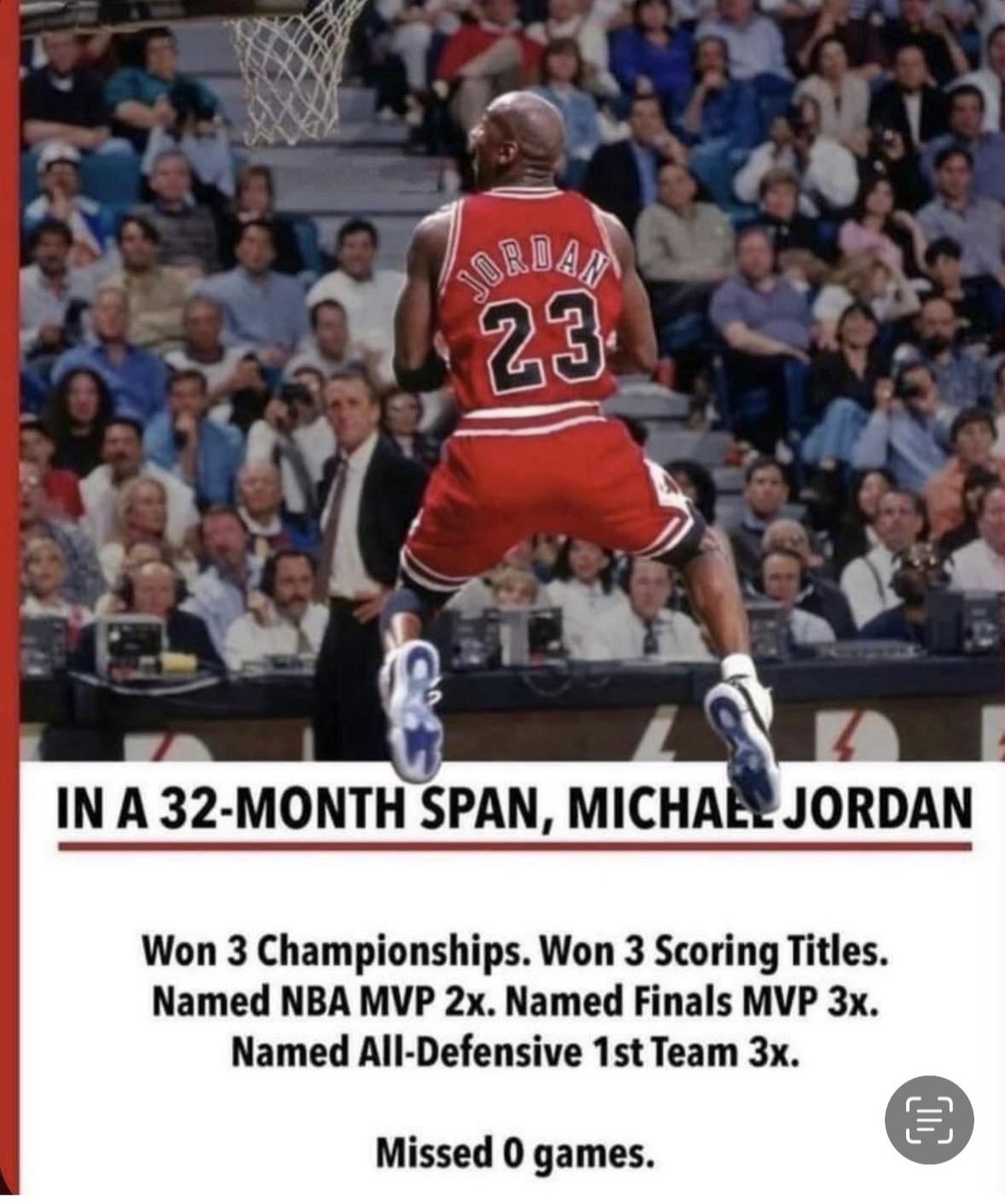
The East was getting called weak even during Jordan’s time, and there were still super elite perimeter players waiting for Bron in the Finals.
?s=12&t=N8KS3iAE6xP2AR5_6BL8mw
The East was monstrously strong at the beginning of MJ's career. Pistons, Celtics, Sixers, and Bucks were all stacked, and people called the West the weaker conference. Those were all teams of the 80s, and they all faded on slightly different timelines. The Pistons won the championship in 1990, but the other 80s teams were some kind of done. No more Dr. J or Moses in Phili, Bird playing on a broken back in Boston, no more Moncrief/Marques/Lanier in Milwaukee.
So the 90s East is a completely new generation of teams. The Bulls first championship is them kind of eating up the remains of the last generation, easily defeating the corpses of Detroit, Phili, and Magic's Lakers. New York doesn't become a real contender until 1993, the end of the Bulls first 3-peat. The Cavs are super legit for most of the first 3-peat. MJ retires, and that's when Shaq and Penny make the Magic a contender. The Hawks are up and down. Eventually the Reggie Miller Pacers become legit, and Pat Riley makes a bruising team in Miami.
But during most of the Chicago dynasty, the best opponents are all in the West. Stockton/Malone Jazz, David Robinson Spurs, Hakeem Rockets, Barkley Suns, Payton/Kemp Pacers, Drexler Blazers.
I don't think the East was quite as sad as it was sometimes during the Lebron-era. Some of the would-be Lebron challengers fell apart before they really got going (Derrick Rose injury in Chicago, Paul George injury in Indiana + weird Roy Hibber mental meltdown).
I think a pretty simple way to generally assess how “weak” a conference is for purposes of getting through the conference in the playoffs is to look at how many 5+ SRS teams there are in the conference, and then add any team that is below that threshold but is the defending champion with the same core and actually won at least one playoff series (since that’s typically a very good team that’s just coasting in the regular season), and any team that actually won the title that year. This can be a bit overinclusive and underinclusive, but it’s going to generally capture things.
Here’s what we come up with under that threshold for Jordan’s years. If the Bulls were one of the teams that were counted, I note that in parenthesis.
1985East: 2
West: 1
1986East: 2
West: 1
1987East: 2
West: 2
1988East: 2
West: 1
1989East: 3
West: 2
1990East: 1
West: 3
1991East: 3 (2 without Bulls)
West: 3
1992East: 2 (1 without Bulls)
West: 3
1993East: 3 (2 without Bulls)
West: 2
1994East: 1
West: 3
1995East: 1
West: 4
1996East: 2 (1 without Bulls)
West: 4
1997East: 4 (3 without Bulls)
West: 2
1998East: 3 (2 without Bulls)
West: 3
This method exemplifies a lot of what you said. The East was stronger in the 1980s. The East was then a bit weaker in the first few years of the 1990s. It was good again in 1993—in large part because the Knicks had really arrived. With Jordan leaving the East, the conference was weak in 1994 and 1995, and it stayed a bit weaker in 1996. However, on balance, the conferences were pretty equal overall in the second-three-peat years. There were some shifts during Jordan’s career, so there were years where the East was a bit squishy (particularly the very early 1990s), but overall the two conferences were about equal in his years.
Of course, if you just ignore the Bulls being in the East, then the West was stronger in most of the Bulls title years, but that’s not really a fair way to look at conference strength. And, notably, the Bulls never had a single year where there was no other team in the Eastern Conference that had a 5+ SRS. There was always at least one other team in the East that had a really good season!
Let’s do the same for LeBron’s years in the East.
2004East: 1
West: 3
2005East: 1
West: 3
2006East: 1
West: 3
2007East: 0
West: 4
2008East: 2
West: 5
2009East: 3 (2 without Cavs)
West: 2
2010East: 2 (1 without Cavs)
West: 3
2011East: 2 (1 without Heat)
West: 3
2012East: 2 (1 without Heat)
West: 2
2013East: 1 (0 without Heat)
West: 4
2014East: 1 (0 without Heat)
West: 5
2015East: 0
West: 3
2016East: 1 (0 without Cavs)
West: 3
2017East: 1 (0 without Cavs)
West: 3
2018East: 1
West: 2
This tells a very different story. The East was definitely far weaker than the West for the first four years of LeBron’s career. There really were almost no remotely good teams in the East that entire time. They were also weaker than the West in 2008, but at least they were starting to have good teams. From 2009-2011, the East actually was not weaker than the West. That was theoretically true in 2012 as well, but the 7.43 SRS Bulls had their best player go out injured, so that year ended up being the turning point where we entered another era where the West was incredibly weak. And that basically stayed the case the rest of the time LeBron was in the conference.
I noted earlier that Jordan never had a year where there wasn’t another 5+ SRS team in the Eastern Conference. LeBron had 6 of those years.
I also note that that 2009-2011 time period where the Eastern Conference wasn’t actually weak corresponds with the time period of LeBron’s career that was most disappointing from the perspective of converting regular season success to playoff success. That’s not a coincidence IMO. Of course, one of those years they did actually get through the East, but it’s just tougher to get through an entire playoff run where you need to beat multiple good opponents to win the title.





 LeBron is 0-7 in game winning/tying FGs in the finals. And is 20/116 or 17% in game winning/tying FGs in the 4th/OT for his career. That's historically bad