





In tradition, I'll dive here a bit into the Canadian team and try to assess its strengths, weaknesses, and prospects (which I find especially challenging this year.
Let's start.
CHAMPIONSHIP LOCATION, DRAWS, AND SCHEDULE
The championship this year will be in Xalapa, Mexico (June 3-9) and, as usual, the four top teams will qualify for the FIBA U17 World Cup next summer.
Without knowing much about the other teams and who they are bringing this year, it seems Canada got the tougher group this time, with hosts Mexico, as well as probably the best two teams in South America in Argentina and Brazil. The problem here is that just one loss and you’re likely to have a meeting with the US in the semis. That said, the real key game, as always, will be in the QF, because a win there means guaranteeing a spot in the U17 WC next year.
We’ll play three games in the preliminary group stage: Argentina (August 23), Mexico (August 24), and Brazil (August 25). Then there’s a one-day break before the quarterfinals (#1 against #4 from the other group; #2 against #3), the semis, and the final on the 27th, 28th, and 29th respectively. Altogether, 6 games in 7 days. All games are streamed on the championship website:
http://www.fiba.basketball/u16americas/2021
A BIT OF HISTORY
This will be the 7th tournament in the bi-annual edition of the U16 FIBA Americas. Canada has won silver or bronze in all of the 6 previous tournaments but never won the gold. Still, in the last three tournaments, it has taken over from Argentina as the second-best team in the Americas and as tournament finalist. But this does not mean that our talent level has become consistent and there’s still quite a bit of fluctuation in the quality of teams we put up in these events.
In the first three championships, we had some strong individual performances (Pangos in 2009; Murray in 2013). But we were not able to translate it into team success, losing to Argentina and to Puerto Rico in the group stages, which led to inevitable meetings with the US in the semis.
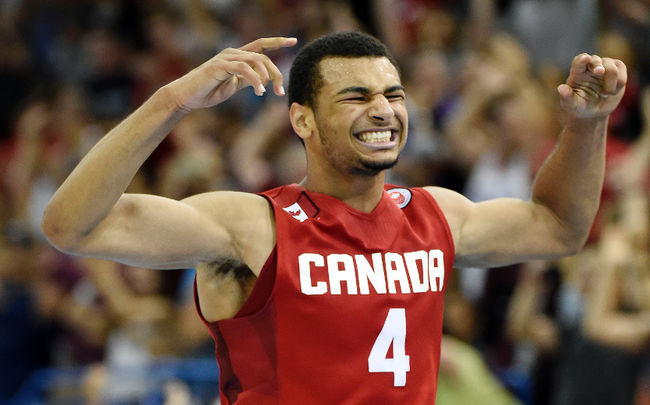
Jamal was not enough to bring Canada to the finals in 2013
The 2015 cadet team for the FIBA Americas championship was one of the deepest and most talented youth teams in Canadian history. It included RJ Barret, Simi Shittu, Iggy Brazdeikis, and Andrew Nembhard, as well as Marcus Carr, Noah Kirkwood, and Jaelin Llewellyn. That team easily won its four first games by an average margin of about 40 points. Then it stunned the US team (Wendell Carter Jr., Kevin Knox, Tre Jones, Gary Trent, and Markus Howard) with an early 19:3 lead at the end of the first quarter and continued to lead through the end of the third quarter. But eventually, the US size and mainly its depth were too much in the fourth and the Americans finished with the gold.
The 2017 U16 FIBA Americas Canadian Team was much weaker, due to a mix of less-talented classes and some significant no-shows (mainly Patterson and Alexander-Moncrieff). That team (their best player was Cashius McNeilly), seriously lacked size, athleticism, outside shooting, and perhaps most of all shot-creators. What we had was still enough to reach the gold medal game, but some of the games were uncomfortably close. And then, in the gold medal game, Canada was destroyed by a much bigger, much more athletic, and MUCH more talented US team (which included guys like James Weisman, Jalen Green, Jalen Suggs, Scottie Barnes, and RJ Hampton). The game ended with a margin of 50, but it was an unpleasant experience, and felt like the Americans could have made it +80 if they really needed to. In all likelihood, none of the players from that Canadian team will eventually make it to the league.
Two years ago, in 2019, we again had a strong team, led by Ryan Nembhard, Houstan, Sharpe, and Boakye. Nembhard and Houstan played especially well and Sharpe had his first breakout tournament, with Boakye making some noise in the paint. It was again enough to win all the games up to the final by a comfortable margin. But like in 2015, the Americans, led by future leaguers like Jalen Duren, Jabari Smith, Amari Bailey, AJ Griffin, and Chris Livingston were again bigger, more athletic, and deeper. So although it was not a blowout and we managed to keep it fairly close with strong games from Houstan and Nembhard, the eventual winner of the gold medal was never really in doubt. Still, that team will likely generate 2 to 4 NBA players, which is all you can ask from a Canadian cadet team (especially since you can’t always identify the best talents this early on).

Sharpe had his first coming out party in the 2019 U16
SO WHAT ARE WE GETTING IN 2021?
It’s always hard to be sure at such an early stage, as players are so young and haven’t been tested. But this time around there’s even more uncertainty (for me at least) since COVID meant no regular high school season in Canada last year and no provincial nationals for the last two summers. This means that some of the players on this team I’ve only seen very sporadically. So I’m certainly willing to be pleasantly surprised.
Still, if I had to guess, I would probably wager that this young Canadian team is going to look closer to the one from 2017, not the ones from 2015 and 2019, with the caveat that I still think there might be more long-term potential on this team than in that 2017 team.
How come?
First, like in 2017, we’ll be missing a couple of key players and unfortunately, most of them appear to be playing in similar positions, the ones where we don’t have much depth. In particular, this team might be vulnerable in terms of shooting guards and wing players with some size. From what I’ve heard, the two best wings in the class of 2024 – Jalique Dunkley-Distant and Jovan Milicevic (maybe I’ll write a bit more about these two later on) – were both excluded from the roster because they did not (or perhaps would not) take the vaccine. If that’s indeed the case, it’s quite a shame. And they might also not be the only ones excluded for this reason.

Jovan Milicevic will be missed this summer
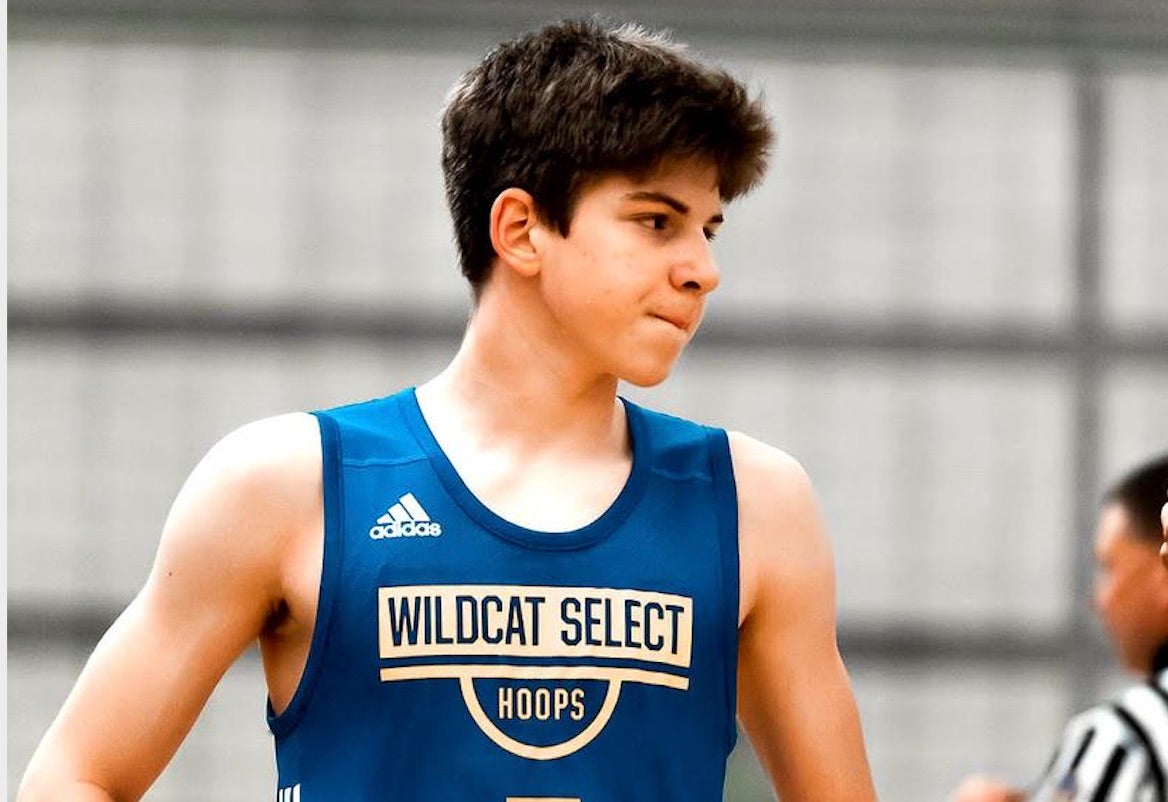
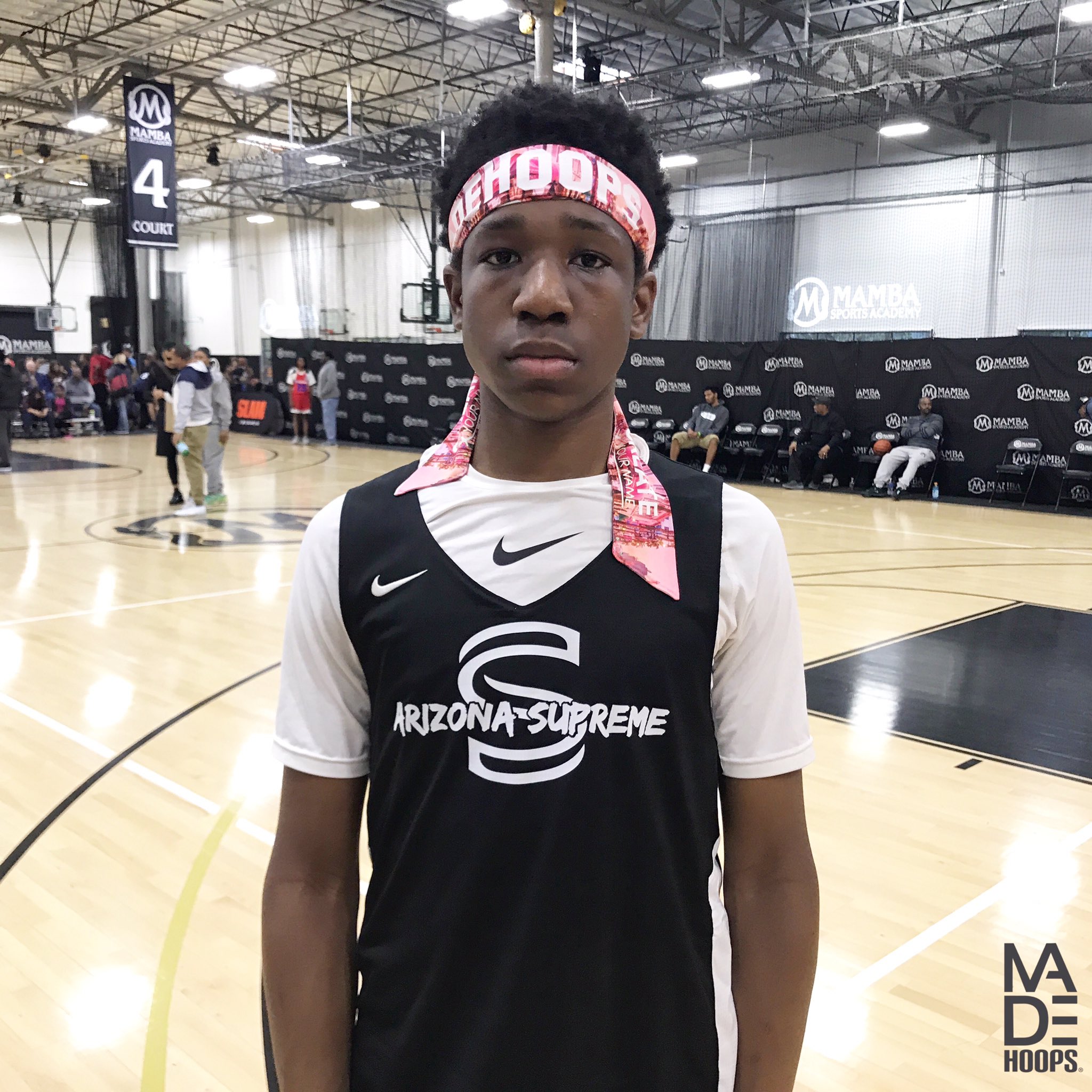
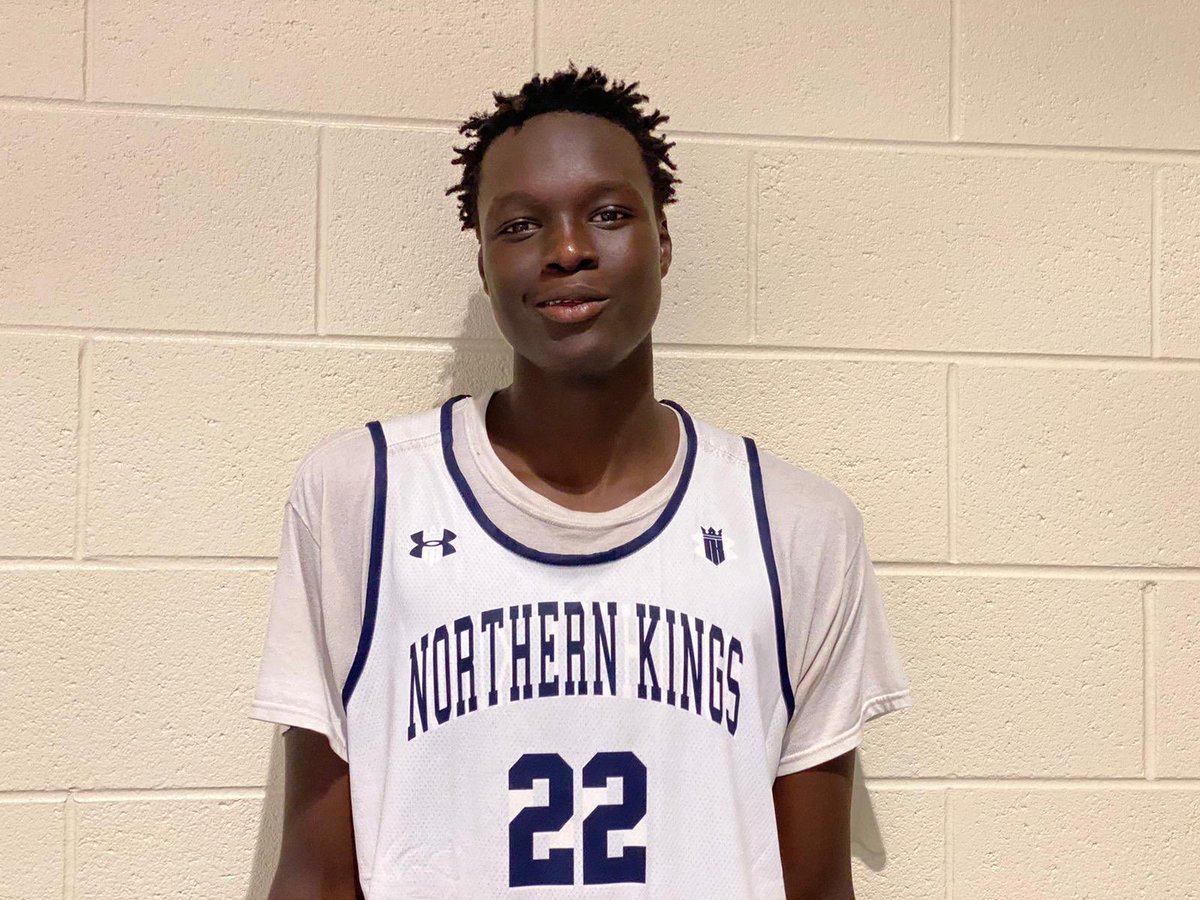
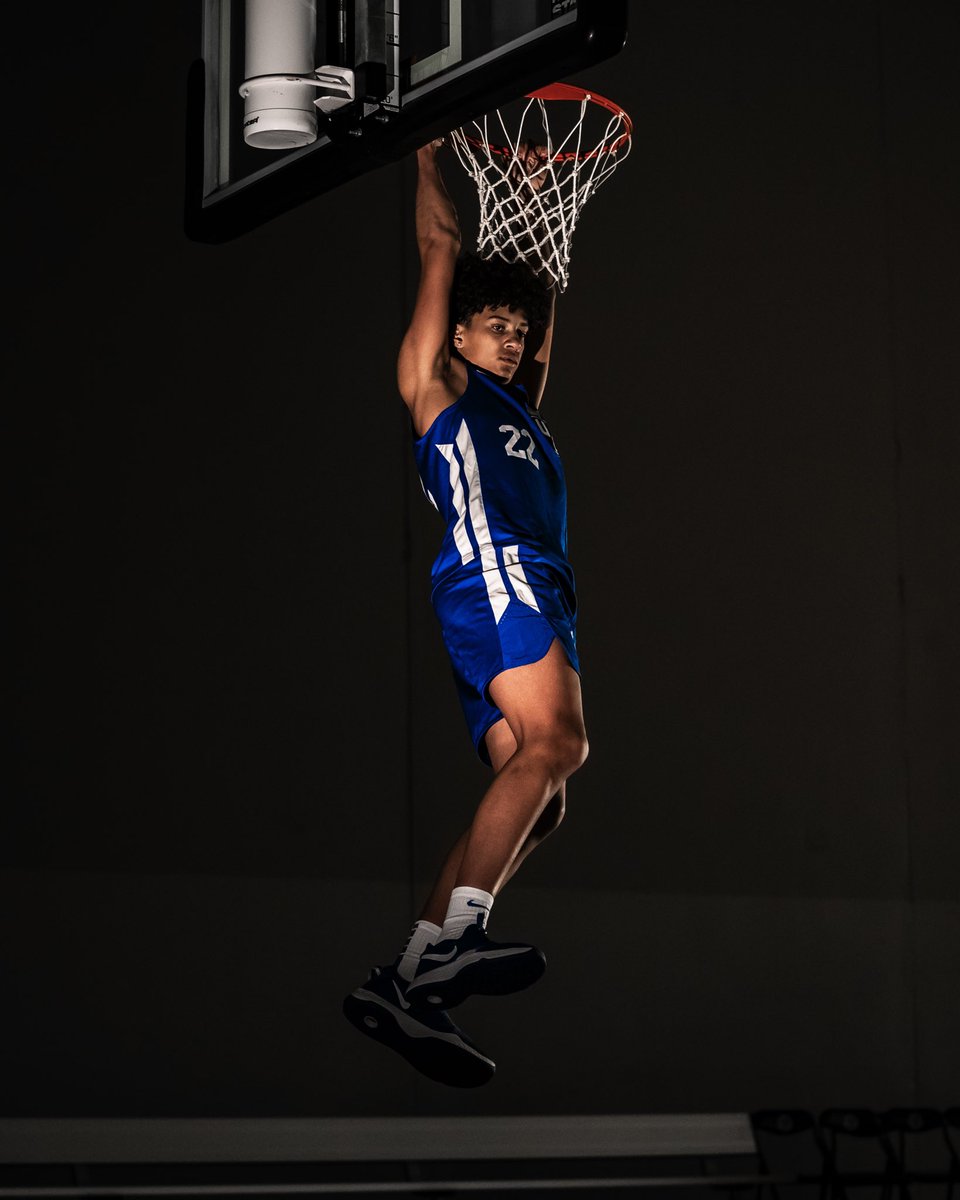
Other forwards who didn’t make it to the final roster (I’m not privy to the reasons why) include interesting prospects like Jordan Atahir (2024), Brayden Jackson (2024), Chris Tadjo (2025), and Jacob Hammond (2025), all at least 6’6 and lengthy. With all of these out, this team doesn’t seem very balanced and lacks size on the wing. By my count, there are 6 point guards or combo guards on the roster, most of them 6’3 or shorter. But there are only two or three shooting guards/wings. So while we have a 7’5 guy (not sure how much he’ll actually be able to play), we might be quite vulnerable against teams with big guards and SFs (did anyone say the US?).
The full roster from Basketball Canada (some of the heights and positions seem a bit off to me):
Taj Au-Duke
Point Guard
6'2”
Scarborough, ON
Undecided
Jaeden Brooks
Power Forward
6'7”
Calgary, AB
Edge Prep
Stefan Jimenez-Vojnic
Power Forward/Centre
6’9”
Toronto, ON
United Scholastic Academy
Baraka Okojie
Point Guard
6’0”
Caledon, ON
Undecided
Efeosa Oliogu
Small Forward
6’7”
Oshawa, ON
United Scholastic Academy
Stephan Osei
Power Forward
6’9”
Toronto, ON
RSL Academy
AJ Osman
Guard
6'3"
Ottawa, ON
Dream City
Olivier Rioux
Centre
7’4”
Anjou, QC
IMG Academy
Ishan Sharma
Shooting Guard
6’5”
Milton, ON
Fort Erie Int. Academy
Jacob Theodosiou
Guard
6’4”
Waterloo, ON
Western Reserve Academy
Mikkel Tyne
Point Guard
5'10"
Brampton, ON
Huntington Prep
Char Yeiy
Centre
6'8"
London, ON
Blair Academy
I’ll dive a bit into the roster specifics later on.