CptCrunch wrote:Caneman786 wrote:CptCrunch wrote:
Misinfo here: The most common age for a man to stop growing (at least significantly, by more than an inch) is 16.
It's not uncommon at all for a man to stop growing at age 15, and in fact, that's more likely than a man continuing to grow past 18, statistically.
That's actually wrong. Try not to not spread misinformation when calling out so called misinformation. Your claim is easily refuted by any growth chart. The mean age of stop is 18-19. You can go google any variations of this; it's all going to be the same pretty much. There will be no charts showing some age 15/16 stops.
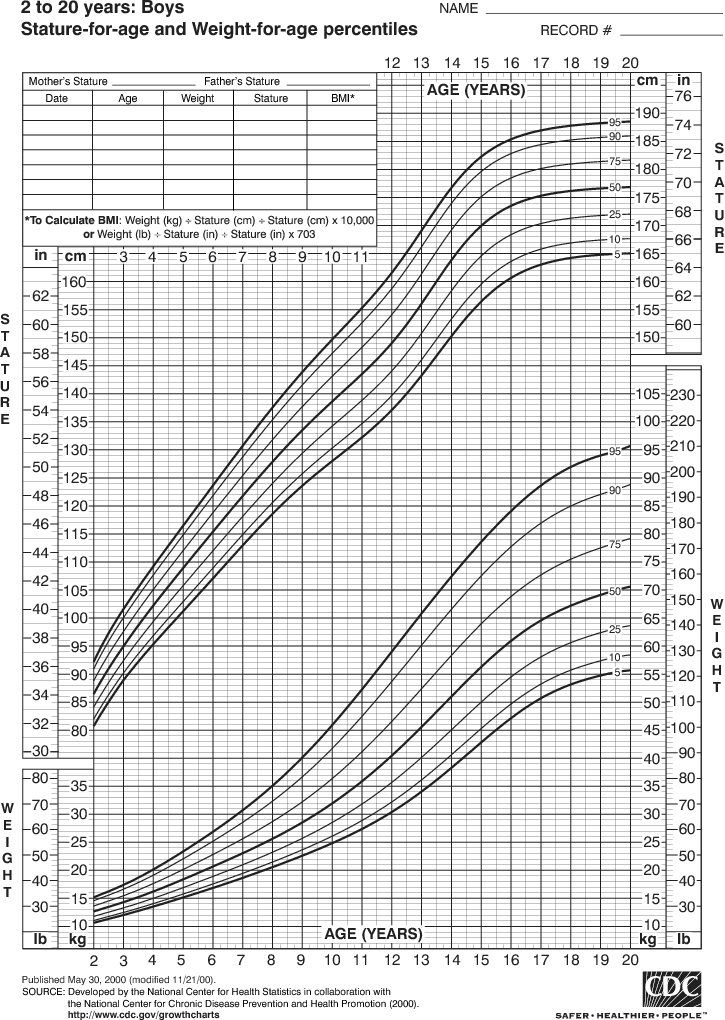
Growth is largely linear for boys on average, and it's going to take an act of god for someone to get to 6'5" by age 15 and not a grow an inch from 15 to 19. Can Tounde do this? Yes, it's possible but given the countless scandals of age faking in sports, the parsimonious explanation is obvious.
It's not misinformation. The increase children are experiencing after the age of 16 on the growth chart is driven by the few outliers who are still growing, pushing the percentiles upward as they experience the end of their growth spurts (and even then, marginally).
If you really get down to it, the 50th percentile male mark moves less than an inch from the age of 16 years and 4 months (from 5' 8.63" to 5' 9.63").
And you might be thinking for the athletic freaks of the world, and possibly there are more cases of success since going through a late growth spurt can be good for basketball development.
However, in general, the pattern of the ultra-tall percentile mark of the chart is the same as the middle percentile (which was surprising to me). The 20-year-old 97th percentile man is 6' 2.88" barefoot. And the 97th percentile male reaches 6' 1.88" when he is 16 years and 3 months old.
All this, of course, doesn't prove much. The much more important factor here is the age that the growth plates fuse in. There have been many studies on this.
Generally, there is a final sign that orthopedic doctors look for that signals the end of vertebral growth (or height growth, since the lower limbs usually cease growing earlier than does the trunk of the body). This is the complete ossification (which means turning into bone) and fusion of the iliac apophysis, which is featured in the Risser sign's scale, that has a six-point grading system to measure this, going from stage 0 to stage 5. Stage 5 here is the final ossification and fusion. Typically, there shouldn't be any growth at all after stage 5 is achieved.
The most common mean age that is cited for stage 5 in males is age 16, while the range of reaching stage 5 for normal individual males goes from age 13 to age 20. If Tounde were to stop growing at 15, it wouldn't be unusual at all. It's well within the range.
Then, compounding this, the average age of physical maturity for Africans is one year lower than it is for Europeans. Early bone development in general is seen in warmer climates, and Tounde is from Benin in Africa.
Source:
https://pmc.ncbi.nlm.nih.gov/articles/PMC2816746/Of course, you could be right about the Tounde's age specifically. It has happened before. I just wanted to nitpick at your reasoning, since I don't think it's enough evidence.